Core Architectural Principles
- Stylus vector coordinate mapping prevents line distortion caused by asymmetric display aspect ratios.
- Hardware-accelerated 4:4:4 chroma subsampling preserves fine typographic edges and color grade fidelity.
- Adaptive frame buffering stabilizes multi-track video scrub rates without introducing cursor tracking lag.
Table of Contents
Creative Pipeline Synchronization
Chroma Subsampling
4:4:4 color compression protocols eliminate color fringing and maintain gradient precision across remote canvases.
Pressure & Tilt Passthrough
Direct USB bus redirection routes 8,192 levels of pressure and 60-degree tilt vectors with sub-frame response.
Display Color Profiling
Local ICC color profiles map into remote session streams without chromatic clipping or Gamma distortion.
Frame Buffer Modulation
Variable refresh mechanisms isolate scrubbing timeline threads from static UI render passes.
Creative Session Preflight Checklist
Field Verification Checklist
- Lock color pipeline settings to 4:4:4 chroma before any color-critical work; subsampled video corrupts gradient and grade decisions.
- Route digitizer tablets through dedicated pressure-sensitive channels — generic mouse emulation destroys stroke fidelity.
- Warm local preview caches so asset browsing does not stall behind remote file enumeration.
- Verify the session sustains 60 FPS under brush-stroke load, not just during idle canvas movement.
Precision, Fidelity, and Frame Consistency
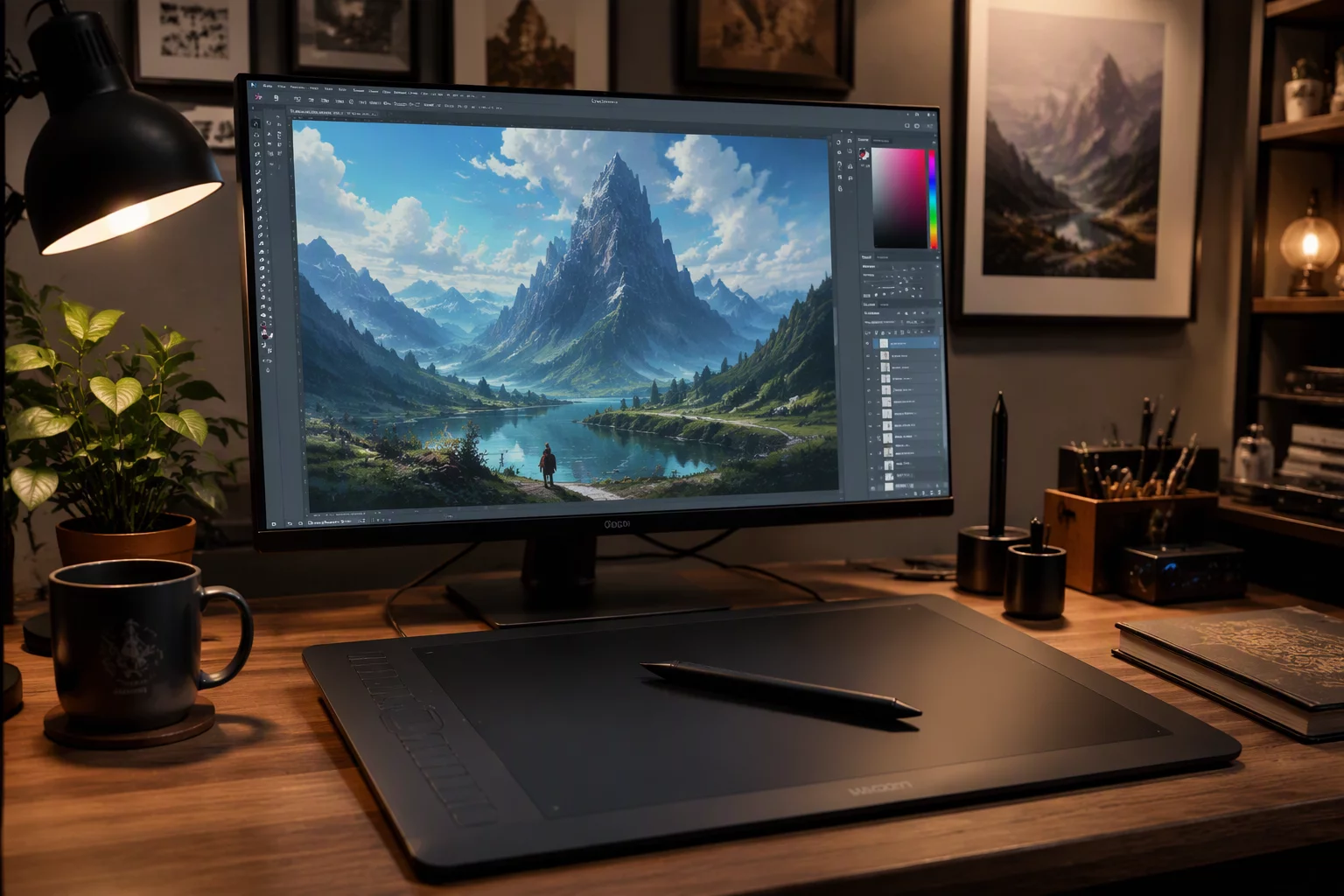
Creative workstations require an entirely different performance tier compared to typical office software. Digital illustrators, video colorists, and 3D animators rely on visual precision where standard remote desktop compression schemes introduce disruptive artifacts. When working across remote instances, standard 4:2:0 subsampling discards half of the chroma information, turning subtle shadow roll-offs into visible color banding and corrupting edge details in vector paths.
Configuring high-performance protocols such as hardware-assisted HEVC or AV1 encoding with full 4:4:4 sampling maintains color integrity throughout remote sessions. At the same time, digitizer peripherals must communicate over low-overhead event pipes rather than generic mouse emulation. Direct coordinate pass-through ensures natural brush strokes, accurate pressure transitions, and seamless gesture recognition across complex digital asset creation tools.
In remote creative engineering, fidelity is not just an aesthetic luxury; it is the fundamental baseline that determines whether an artist can make dependable color and composition decisions.
— David Chen, Senior Digital Pipeline Architect
Multi-display environments add another layer of operational friction if resolutions differ between client and host machines. Standardizing virtual canvas scaling and enforcing unscaled display boundaries guarantees that visual assets render at 100% native resolution. Combining these practices with dedicated audio-video synchronization creates a workspace where high-end rendering happens remotely while feeling locally responsive.
Technical Specification Benchmarks
| Operational Parameter | Standard Context | Optimal Recommendation | Impact Factor |
|---|---|---|---|
| Chroma Compression | 4:2:0 YUV compression | 4:4:4 RGB / YUV Passthrough | Critical |
| Stylus Input Latency | 45ms – 65ms (Mouse Emulation) | < 16ms (Direct HID Pipe) | High |
| Refresh Rate Stability | Dynamic 30fps – 60fps | Locked 60fps / 120fps Sync | High |
| Color Profile Mapping | sRGB Generic Clamping | Display P3 / Rec.709 Direct ICC | Critical |
Discussion & Insights
No comments yet. Be the first to leave a comment.
Leave a Methodological Observation